Bivingsville Manufacturing
Company - 1830 - 1876
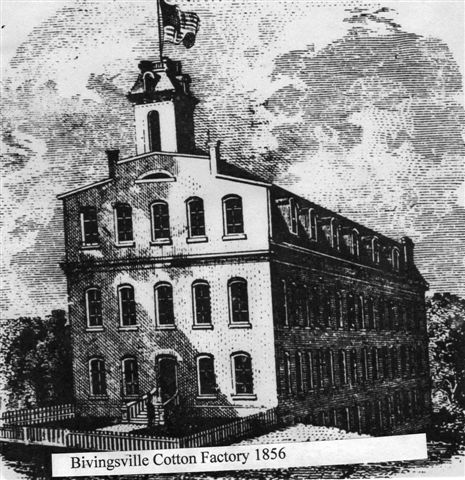
The forerunner of Glendale Mills, Bivingsville
Manufacturing Co. (Bivingsville Cotton Factory as it
was also called) was founded by Dr. James
Bivings who was born April 28,1787 in Edenton,
North Carolina. He was a Medical Doctor who had become
infatuated by the textile manufacturing process.
Bringing with him from Lincolnton N.C. craftsmen
needed for the task, he bought land on the banks
of the Lawson Fork river in Spartanburg County in 1830
to build what was destined to become the oldest
continuous operating cotton mill in Spartanburg county
as of 1961. The factory with 1200 spindles and 24
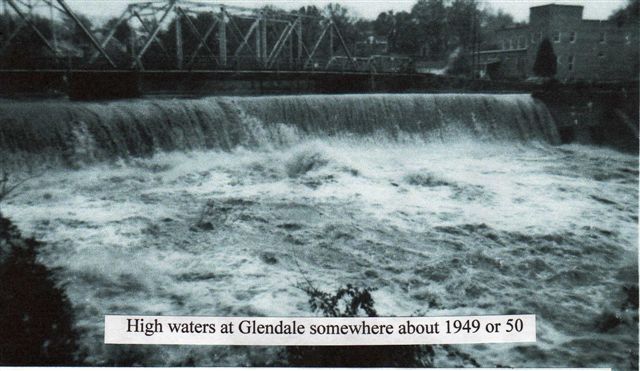
looms was powered by a 26 foot water wheel with a 12
foot breast and started production about 1835. It was
reported that he had the machinery shipped from New
Jersey.
Old timers tell us that Dr. Bivings being a very
religious man, on one occasion stopped the mill asking
all employees to attend the revival which was being
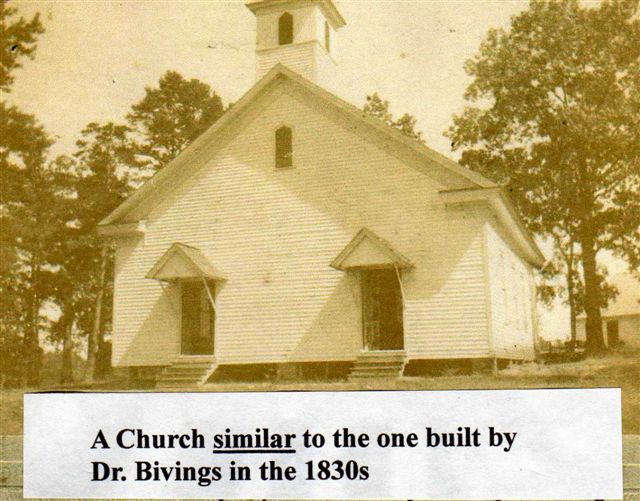
held in the village. Along with the mill plant, Dr.
Bivings founded the village of Bivingsville which
consisted of some 12 homes, a community church in
which old timers said that school classes were taught
during week days, along with a shop or two. Mr.
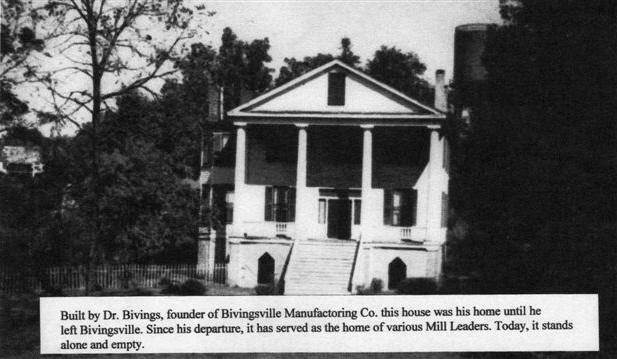
Bivings built two magnificent houses in Spartanburg
County which stand today. First he built (about
1834-35) a magnificent two and one half story house
located directly in front of the mill composed of
twelve rooms and a full size basement. A huge fire
place was located in every room.
Dr. Bivings built another two and one half story house
on North Church Street in Spartanburg in 1854 where he
lived for a while before selling to his brother
in-law, John Evins shortly after the civil war and
eventually became the home of John’s son, Choice
Evins, Dr. Bivings nephew, who later became President
of Glendale Mills.
Prospering for some 10-15 years the factory fell into
serious trouble in an economy crash at which time Dr.
Bivings divested himself of all interest in the
Bivingsville Mill. Dr. Bivings went on to build the
Crawfordsville Mill (later changed to Fairmont) which
was reported as being “very prosperous.” Dr.
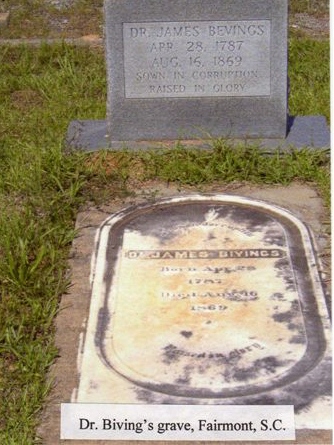
Bivings died August 16, 1869 and was
buried in the Fairmont Methodist cemetery,
Fairmont, South Carolina not far from the mill he had
founded. Recent research has discovered the full text
of Dr. Bivings' obituary as published in several
publications in 1869. You can read this at Dr. Bivings Obituary.
After Dr. Bivings - 1854 -1876
Having left control of the
Bivingsville mill to Silas C. Leitner who had
been his partner, with the economy worsening and
finding himself in a hopeless situation by ever
increasing debts, Mr. Leitner left town in early 1855,
leaving the mill in bankruptcy to be sold in a
Sheriff's sale.
Forming an association among
themselves with a capital of some $30,000.00, J.
Bomar, Simpson Bobo, S.N. Evins, Vardry McBee,
J.C. Zimmerman and Dexter Converse bought the plant
for $19,500 in 1856 and operated for a number of years
under the name J.Bomar & Company with Dexter
Converse serving as Manager. A copy of this
association along with a picture of the Bivingsville
Mill was hanging in the mill office at Glendale the
last time I remember seeing it. When the Civil War
broke out, some being suspicious of a Yankee being in
town, Mr. Converse and Mr. Twichell, his brother
in-law who had come from N.Y. in 1859 to be bookkeeper
in the Bivingsville mill, volunteered for the
Confederate army but was released in about six months
being given an honorable discharge by Gen. Robert E.
Lee to return to the mill which was producing material
for the Confederate army. Along with war necessities,
swords, bowie knives and uniform material, the mill
was also producing shoes with wooden soles.
Following Mr. Bomar’s death,
(1868) Dexter Converse was promoted to President.
Having reorganized by 1875, the mill had some 5,000
spindles, 120 looms, 175 employees, a grist mill, saw
mill, cotton gin, machine shop and it is believed that
a community building and a mill store had been added.
The village had become the show place of the county.
In 1876 Dexter Converse, A.H. Twichell and J.C.
Zimmerman bought all interest of the others, changing
the name to “The D.E. Converse Company”.The
name of the village was changed to Glendale at the
suggestion of Mrs. Converse and the Post-office name
was changed in 1878.
The D.E.Converse Company
1876-1946
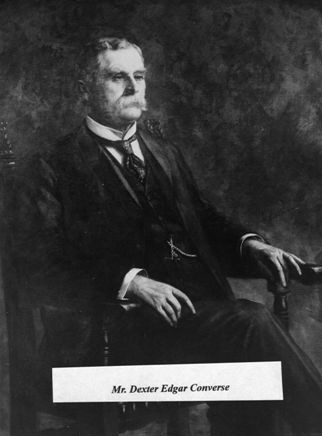
Dexter E. Converse, born in 1828
in Vermont worked in the cotton mills of Canada before
moving to Lincolnton, N.C. from whence he came to
Bivingsville, S.C. to become Superintendent of the
Bivingsville Cotton Factory in 1855. He married his 17
year old first cousin, Helen Twichell from New York in
1855. Having partnered with A.H. Twichell, his brother
in-law, and J.C. Zimmerman to buy the interest of all
others in the mill, they incorporated the Company
as,“The D.E. Converse Company” in 1889 naming Mr.
Converse President.
Under the leadership of Mr.
Converse, the mill continued to grow and prosper. In
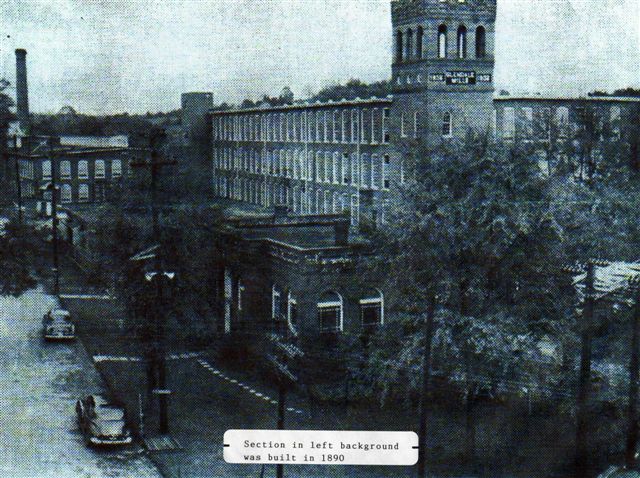
1890 the company had added a three story building to
the complex adding some 12,000 spindles. The village
had some 75 houses. Being a real genius in
textile management and finances, Mr. Converse
with his partners,built and founded Clifton No. 1 Mill
in 1880. In 1888 they built and founded Clifton
No.2 and in 1896, just three years before his death,
they built and founded Converse Mill. A news release
showed he was a stockholder in the Pacolet, Whitney
and Spartan Mills.
Before his death, Mr. Converse
and some of his business partners having a desire for
an institution in which their daughters could be
schooled, founded the college for girls which was to
be known as Converse College.(1889) The
auditorium was named “the Twichell Auditorium” in
honor of his wife’s (Helen Twichell) family name. Mr.
Converse served as President of the Board of Directors
for some ten years and it is said that he made up
school budget deficits out of his own pocket for the
first few years. Shortly before his death he had built
a home on Pine street in Spartanburg where he died on
Oct. 4, 1899, a “modest and much loved man”.
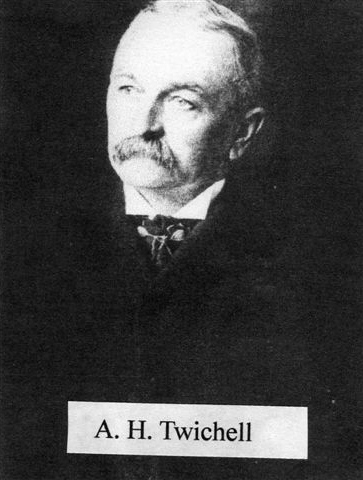
Mr. Twichell had built across
the street at the right of the Bivings mansion in
Glendale, a beautiful, spacious home for him and his
family where they lived until they too, built and
moved into their new home on Pine street in
Spartanburg, S.C. in 1882. Mr. Converse’s death left
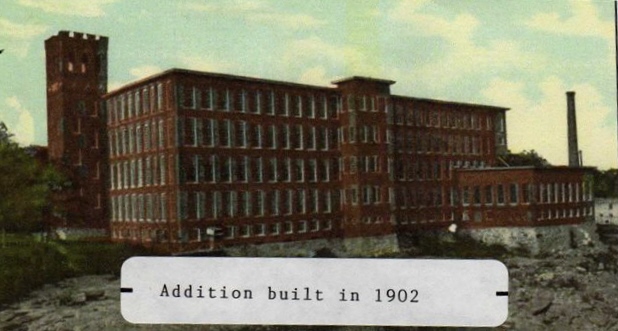
Mr. Twichell as President. Under the leadership of Mr.
Twichell a third building (five story) was built in
1902 having both water and steam power, adding 20,000
more spindles.
Mr. S. Jervey Dupre, who went to
work at D.E. Converse Co in 1879 as a sweeper and
became Company President and treasurer confirms these
figures in an interview which he gave at a later
date. Mr. W.E. Lindsey became president in 1916.
S. Jervey Dupre was secretary, R.F.(Fred) Bagwell had
become Superintendent in 1914 and served in that
capacity until 1944. Albert Brown was card room
supervisor, Will Rogers was boss spinner, Walter
Gregory was over the old mill weaving and Benard White
was over the new mill weave room. I. B.
Rhinehart supervised the cloth room and J. T. Varner,
(my Uncle) was Master Mechanic. In commenting about
the loyalty of the employees and their satisfaction
with their homes, Mr. Lindsey said; ”the people
love to live here, they seldom leave and when they do.
they are sure to come back”
A 1922 report showed the mill having 38,000 spindles. (I
suppose this included the 1200 in the original mill) It
had some 350 employees with a weekly payroll of
$4,000.00. There were 130 homes in the community which
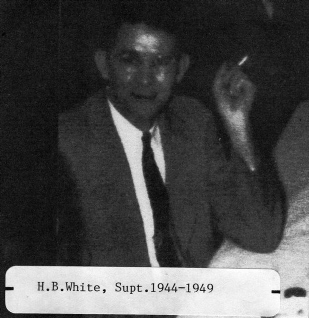
had both water and electricity. Benard White
became Superintendent in 1944 and continued until 1952.
Men who served as President of D.E. Converse Company
were: Dexter Edgar Converse, 1889-99; Albert H.
Twichell, 1899-1916, brother in-law to Mr. Converse;
W.E. Lindsey 1916-28; J.Choice Evins,1928-45, nephew to
Dr. Bivings founder of Bivingsville Cotton Mill;
S.Jervey Dupre, 1945-47.
Click on this link, Presidents,
to read more information about these men.
Glendale Mills 1946- 1961
The D.E. Converse Company was sold in 1946 to J. L.
Stifel and Sons, Warren Chaffin, President. The name was
changed to Glendale Mills in keeping with the village
name. Mr. Jervey DuPre Sr. who had bought his first car
from Sears Roebuck Co. in 1909, and had worked at the mill
since 1879, had been promoted to President and Treasurer
of the company and remained such until 1947 when he
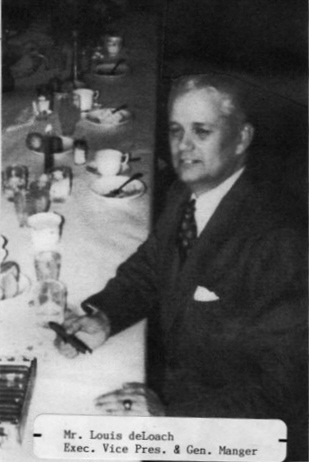
retired from the company. Mr. Louis deLoach, from Springs
Cotton Mills, came to Glendale in 1947 as V.P. and General
Manager. Shortly after his arrival, Mr. deLoach announced
a million and half dollar improvement program destined to
change the mill, village and it’s people for life.
I was serving as Glendale Postmaster in 1948 when Mr.
deLoach approached me about joining the company as
Personnel Consultant/General Manager of the Mill Store and
it’s concessions. After considering the options before me
and experiencing his enthusiasm, I joined the company also
taking Supervision of the engineering and mechanical
department at a later date reporting directly to Mr.
deLoach.
Wishing to keep both written and photographic records of
the progress, he and I both took dozens of pictures along
with keeping records of the work being done. On February
26,1948 the Mill office was robbed of payroll money in the
amount of $18,000.00. Claude Manis was caught in
Tennessee and returned to Spartanburg to be charged and
convicted of the crime. After five years of hard work, the
program was basically finished. An Allison fence was now
enclosing the plant. (1947-48) A two story 20,000
square foot carding and spinning addition had been built
adding 8,000 spindles,4,500 twisters, 23 cards and 27
combers.
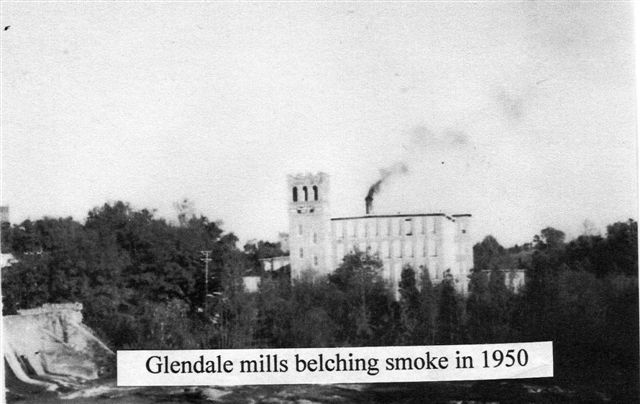
The plant had been renovated from bottom to top, the
interior having been painted throughout. Every piece of
cloth producing machinery had been moved, centralized to
individual departments. A new automatic high speed
elevator had been installed between mill 2 & 3.
Fluorescent lights were added, looms had been motorized. A
new electric control room had been built and new
switchboards had been installed in order to receive and
handle the additional power from Duke Power Co. needed for
the mill and the remodeled houses.
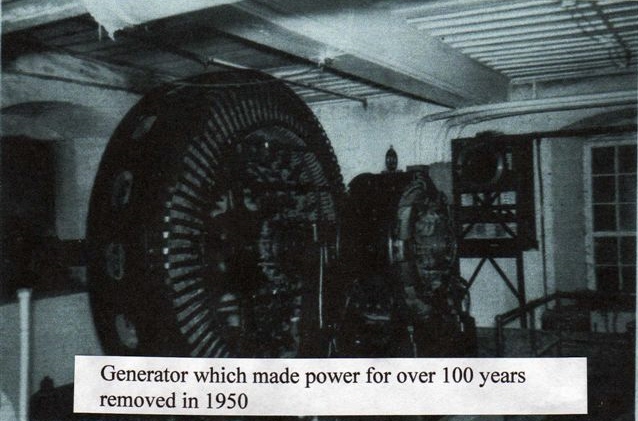
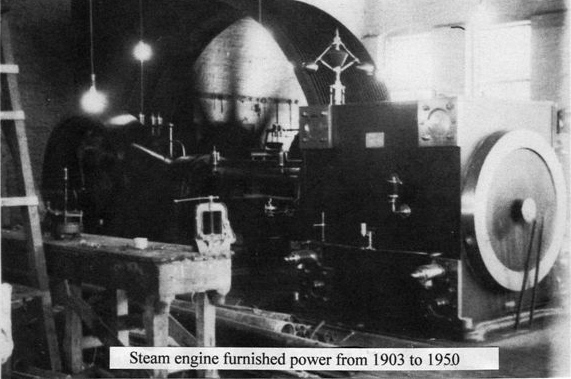
The water wheel, generator and steam engines which had
furnished power for the mill since 1903 and before, along
with the obsolete belt drives, had been taken out with all
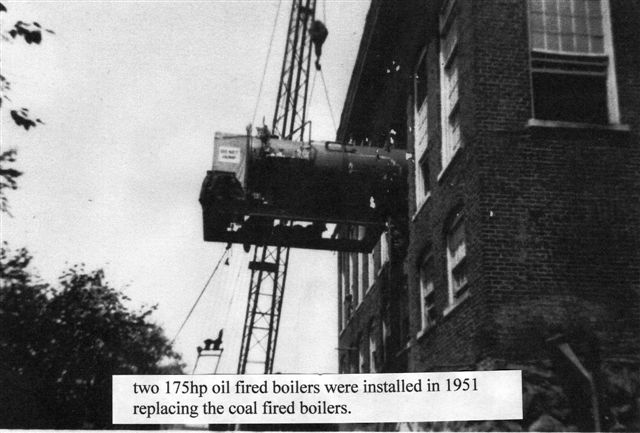
machines having been motorized.(1950). Oil fired boilers
were installed in 1951.Obsolete equipment had been
replaced with new modern equipment. Worn equipment had
been rebuilt or replaced. A new 180 spindle
automatic spooler and overhead cleaning system had
been added. A canteen serving hot and cold sandwiches,
etc, had been built and in operation. A new one floor
weave room for combed material was being built and added
to the end of the plant next to the office.
(1953-54). At this time the Glendale plant had some 45,000
spindles and 1019 looms with some 600 full time mill
employees and some 200 temporary workers for renovation
and construction work.
A bonus system based on one’s longevity with the mill had
been set up. Large Christmas bags containing apples,
oranges, nuts, candies, cookies, pop corn and fruit
cakes weighing a total of some 30 pounds were
distributed to every employee each Christmas. Fourth of
July celebrations were being observed with food,
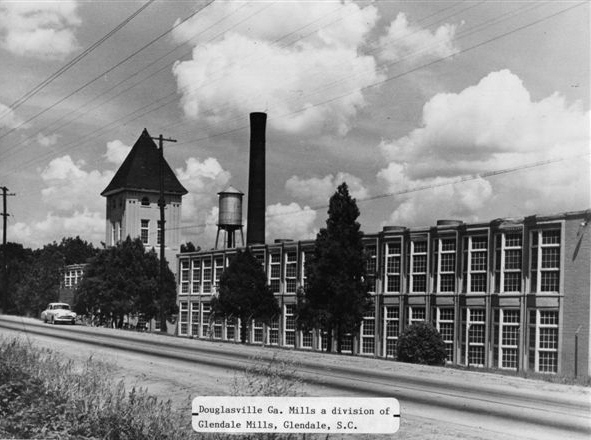
fun and games each year. Glendale Mills had also
purchased and were operating Douglasville Mills,
Douglasville, Ga.
The
Glendale Mill Office Robbery
In 1948, Glendale
Mills was the victim of one of the largest robberies
ever to take place in the Upstate. Read the full
details at Mill Office Robbery.
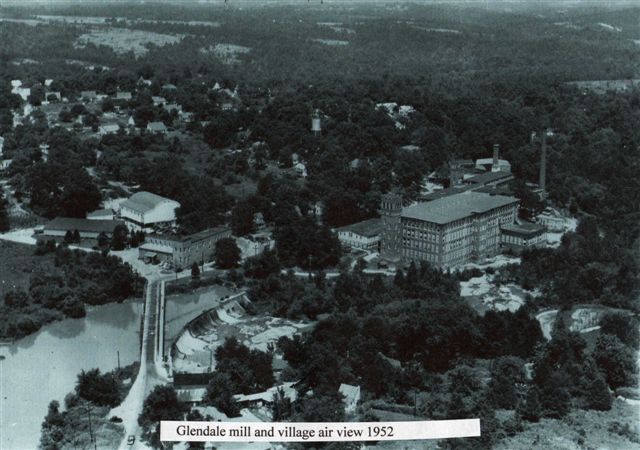
Glendale Mill Village Improvements
The little village which started
as Bivingsville in 1832 with twelve houses, a
community church and a shop or two had by 1946 become
a community of 158 houses with some 800
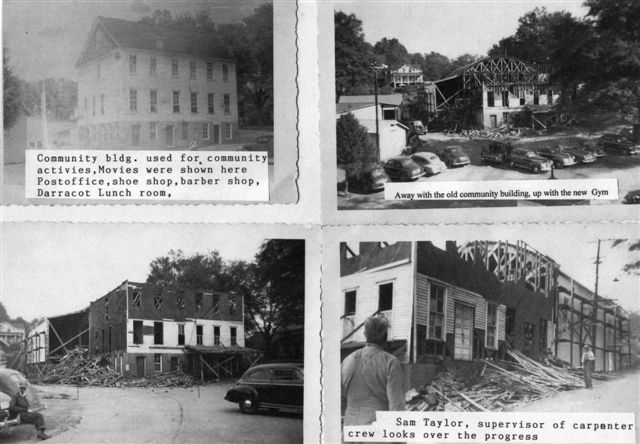
residents. A mill store had been added in the late
1800s along with a large community building in which
school classes were taught for a while and other
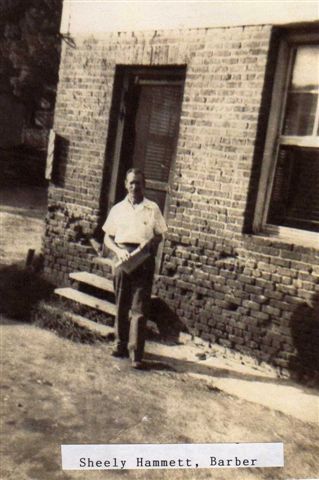
community activities were held. The post-office,
barber shop, shoe shop and a small lunch room were
also located in the building. Though the mill
store had been replaced in 1903 and in moderate shape,
and a modern brick school had been built and four
church buildings added, most all village houses
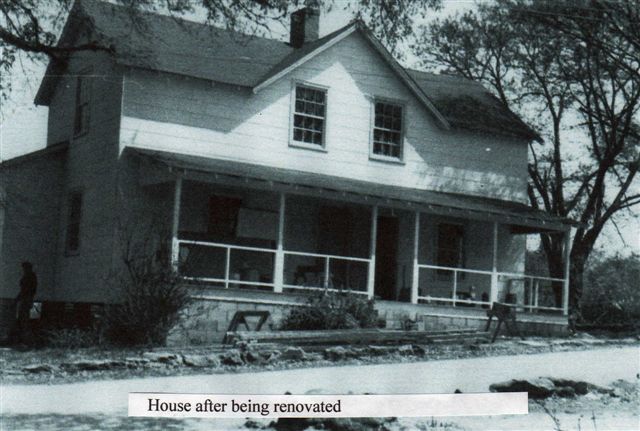
were in poor shape, badly in need of renovation. The
village houses had electricity and running water but
none had provision for hot water heaters or
stoves in that the houses had only 110 volts of
electricity which was insufficient for either. Most
all had bath rooms consisting of an old type commode
with the water tank mounted above the commode. Of the
158 houses, some had been moved with 40 having
been torn down leaving some 118 to be repaired.
All had been renovated adding new modern
bathrooms with hot water heaters with 220 volt
electric service. Two clothes closets had been added
to most six room houses.

A new gymnasium had been built. The old community
building was torn down being replaced by a large gymnasium
in which the post-office, barber shop with hot and cold
showers, a shoe shop, cafe and magistrate office along
with a large recreation area were located in the basement.
Sports teams were being sponsored by the Mill company
along with a Boy Scout troop. The streets which were once
covered with cinders were now paved and renamed,
twisting among a village of some 118 houses, four
churches, three parsonages, 1 school, a large mill
store, gymnasium, three water tanks, a new post-office and
the first community cemetery.
Mr. deLoach had been promoted to Executive VP and
General Manager in October 1951 and to be sure, had made
his imprint on both the mill and the village. In 1955-56
the houses were sold with employees having first choice.
According to my records, when I joined the company they
owned 154 houses in the village, 4 in adjacent areas for a
total of 158 with some 70 being duplex having two families
per house for a total of some 8 to 900 residents. We had
torn down 40 leaving 118 homes to be sold. Of those
118 some 60 were 6 room duplex with perhaps 40 or more
having two family residents meaning that some 6 to 700
persons were living on the village at the time the houses
were to be sold. Of course the family with the longest
tenure with the mill had first choice of purchase.
To my knowledge, every family wishing to buy a home was
able to do so. While some paid cash, financial
arrangements had been made for employees to purchase
their home on installments if and when needed. The average
house sold in the price range of 3 to 5 thousand dollars.
(See receipt for typical
house.)
The Mill is Sold
The mill was sold through a merger with Indian Head
Mills in 1957 and Mr. deLoach announced his resignation,
effective immediately. He and his family were among the
finest families I have ever known and he was the best and
most considerate boss I ever worked with. He was strictly
professional. One of the first things he said in hiring me
was, Clarence, “we want to see that everyone is treated
fair”. While touring the plant together he would not allow
me to even buy him a coke from a machine or in the canteen
lest someone get the idea we were getting too close and
would not be objective in our individual opinions. He was
boss and called the shots and I always appreciated and
respected that fact. He was a genuine southern
Christian gentlemen. Local officials of Glendale Mills
were:
Mr. Louis deLoach, Exc. Vice President/General Manager;
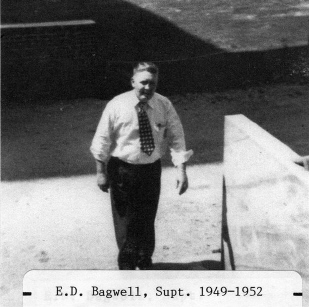
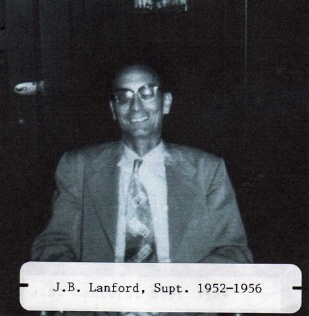
H.B.White,Supt,1944-1949; E.D. Bagwell, Supt.1949-1951;
J.B. Lanford, Supt.1952-1956.
Shortly after Mr. deLoach‘s departure, with Indian Head
bringing in their own team, I was relieved of all
responsibilities in the mill and village but asked to stay
on as store and concessions Manager. The store was closed
in 1958 and I left the company. Following Mr. deLoach’s
death, his daughter gave me many, if not most, of his
pictures along with other material on Glendale. I have
used that along with data which I personally
had, in creating this story on the
history of Glendale Mills.
The above story and photos
about the mill's history were
furnished by Mr.
Clarence Crocker, a life long Glendale
resident, in May, 2009.
Personal Note about Crocker Family Connection
to the Textile Mill at Glendale
According to our family records, my great
grandfather worked in BivingsvilleCotton Mills shortly
after it started production in 1835 and was among the
first to live in the village. My grandfather who was
born at his home on Broadway street in Bivingsville
helped start the first drill loom in the plant and was
boss weaver for many years. My dad worked in the mill
most of his life and when I left, it was the first
time since the early days of it’s beginning (1835)
that a member of my family was not employed by
Glendale Mills or it’s precedents.
Footnote:
Many things have happened since 1958 which have
changed Glendale and it’s people. The mill stopped
production in 1961, shutting it’s doors. This left the
people of the community without employment. Some were
able to find work in plants nearby and were able to
keep their homes. Some sold their homes and moved
away. From the day it closed until the plant was
destroyed by fire (March 21, 2004) the property had
changed hands three or four times finally becoming
just a warehouse. Needless to say, this has had a
devastating effect on the people and the community.
Some houses are vacant, some have been torn down and
some are being poorly maintained . Though recent
interventions have begun to restore the community, the
fact is that the community of the fifties of kind,
hard working friends which we all loved and enjoyed,
to our dismay, no longer exists.
May 2009
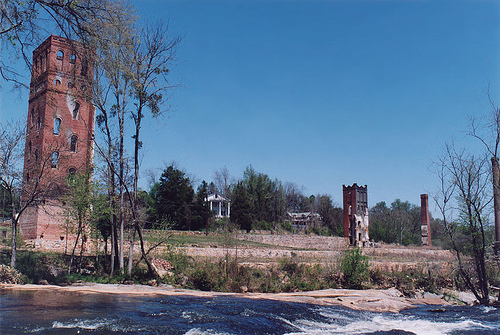 Mill Ruins Today
(Photo courtesy of Jim Cody)