Sports and Recreation in Glendale
From their beginnings, Glendale
Mills and her predecessors, have directly or
indirectly, impacted the recreational and sports life
of their employees and their families.
From the pond waters of the old wooden dam on the
waters of Lawson's Fork, most likely built to supply a
constant source of water with force enough to turn a
mammoth water wheel, 26 feet in diameter and twelve
feet wide, which furnished power to operate the mill,
to the dense woods and massive farm fields, all have
been a constant source of fun and frolic for the
people.
Men and women, rode in their boats and canoes,
fished and, yes, swam in the muddy waters of the pond
while in the winter time when the pond would freeze
over, many skated. I’ve seen upward of a dozen or so
on the waters at one time. Though the ice was thin in
some places and one would crack through from time to
time, I don’t remember having heard that anyone was
ever seriously injured. Just got terribly cold.
With the load on the water wheel increasing due to
increased mill production, a new concrete dam was
built just below the old dam, increasing the size of
the pond thus increasing fish beds and giving
additional water force for the water wheel. Two gate
wheels with which to raise or lower the gates, were
located on raised platform at each end of the dam. A
large wood water trunk carried water from the dam to
the water wheel.
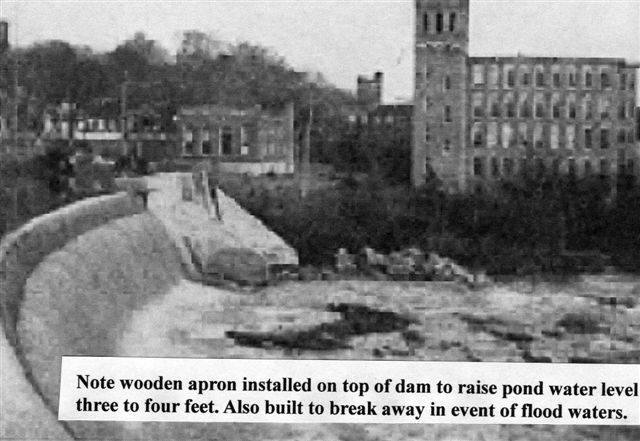
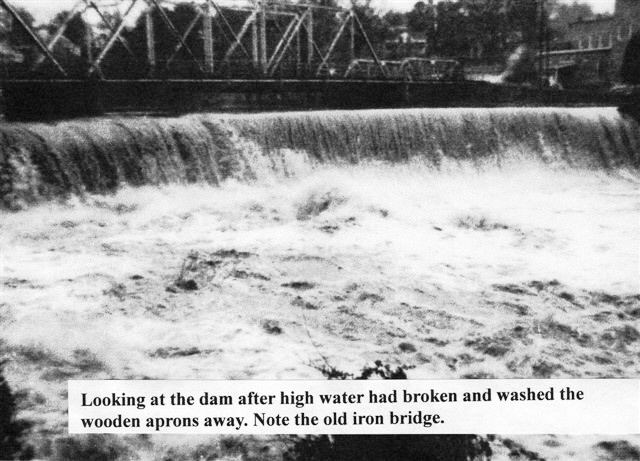
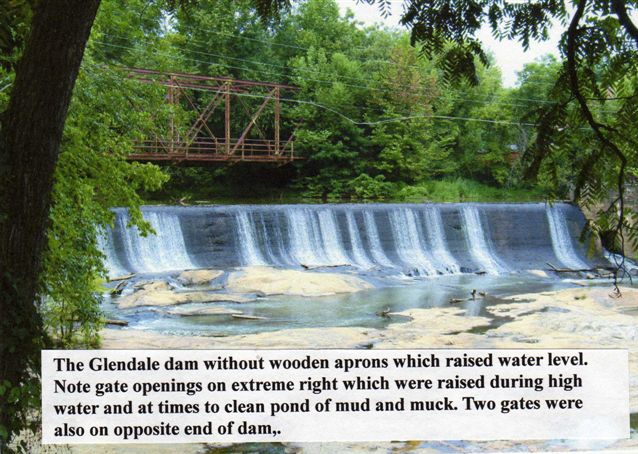
Wooden aprons were installed on the top of the dam
between the two gate wheel platforms raising the pond
level an additional 3 to 4 feet. In excessive rain
periods, the waters would rise over the aprons with
such force, it washed the aprons away. (See pictures
1, 2 & 3) When this happened, the gates had to be
raised to lower the pond level or in some cases, drain
the pond completely, so that men from the mill machine
shop could work on top of the dam replacing the
aprons. J.T.Varner, my uncle, was master mechanic for
some 40 years. Perry Lyda, Oscar Brown, Walt Nichols
and Ed Rush were among his co-workers. John Varner
Jr., Everett Brown, Walter Wertz and Walter Draper
joined forces in the 30 & 40s. I took supervision
of the department in the fifties.
 Picture 1
 Picture 2
 Picture 3
 Picture 4
D.E. Converse Company, which was incorporated in 1889,
owned some1300 acres of land, most being wooded areas,
farm lands and pastures. The wooded areas were full of
squirrels, possums and coons providing plenty of game
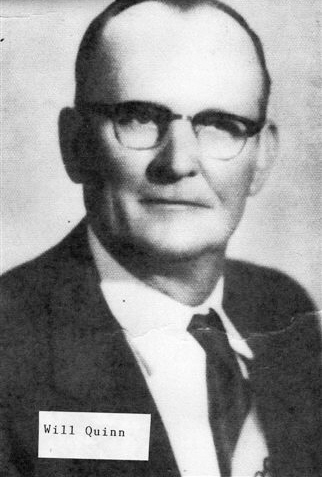
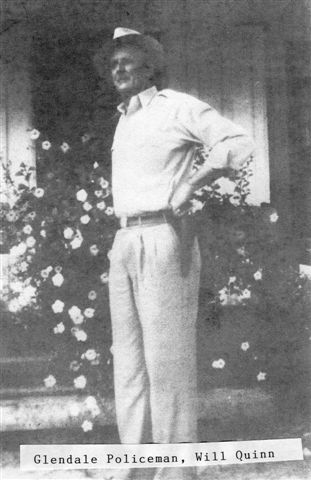
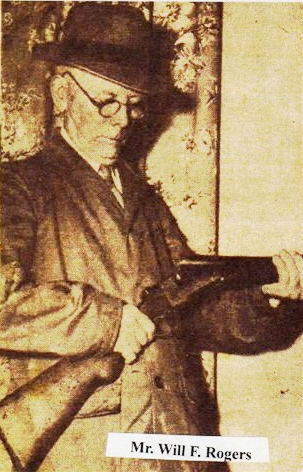
for the sport of hunting. Mr. Will Rogers seen above,
was an avid hunter. I never saw a posted sign upon a
single acre. At one time, there was a small club of
coon hunters who frequented the woods often. Ralph
McGraw of Glendale, an avid coon hunter, was a leader.
Though you don’t hear anything about them anymore
unless you see one dead in the roads, possum was once
considered a food delicacy, not by me, but by many.
Back in the thirties, my Uncle Mitch Allen, a
Spartanburg City policeman, who married my aunt who
was a Glendale lady, and Dr. J. B. Brannon, the
popular Spartanburg Chiropractor of that day, where
good friends and would go out into the company woods
behind our house to hunt possums. Seldom did they come
back without one. They would clean and bake them among
a tray of sweet potatoes, somewhat like they prepared
a small piglet for eating. They both were full of fat
and are no doubt outlawed today by medical advisors.
The farm lands had houses in which the tenants and
their families lived. They tended the farm and
worked in the mill also. The fields were full of quail
and rabbits and fox. Rabbit hunting season opened
about Thanksgiving time and I remember seeing large
groups of hunters, with their rabbit dogs, flooding
the fields looking for rabbits. When bird season
opened, hunters with their bird dogs would again fill
the fields, looking for quail. Up until World War 2,
rabbit, squirrel and quail pot pies were frequent
servings found on the family dinner table.
The pasture land held the villager’s milk cattle, a
few horses for plowing, pulling buggies or wagons and
a few for the sport of horse-riding. Along the edge of
the pasture land next to the village, were a few hog
pens where villagers raised their own hogs for
slaughter.
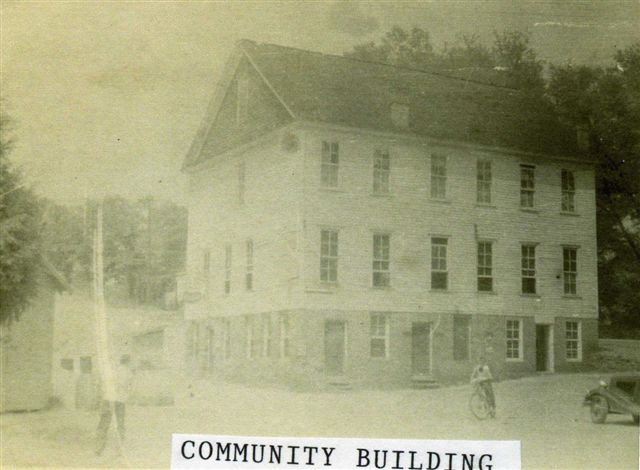
The community building built in the 1800s in “the
flat” of the village (picture 5) had three floors. The
first floor contained the post office, a barber shop,
a shoe shop, the village’s first fast food - Darracot
Lunch room - which was where the youths hung out.
There was also a recreation room where the game of
checkers was the main feature of the day.
 Picture 5
The third floor was for clubs, community groups,
Redman, Woodman, and I think, Masons, met there until
they all moved upstairs in the Company store. School
classes were taught there for a while until a house
built especially for school was opened. (See schools for more
information about the story of Glendale schools.)
Pictures 6 & 7
In the early 1900s, the Glendale Park was built on
the large pond of water up stream from the dam. The
electric trolley car passed over the pond via a
trestle. (See pictures 8, 9 & 10) Records, which I
hold, show that the park was built on a five acre
tract leased from the mill company and was built by
the S.C. Gas and Electric Co. as a business venture.
News reports stated that hundreds came to the park
from all sections of the county, primarily by trolley.
City school teachers arranged trips to the park for
the students. It has been said that on week ends and
holidays, the park was filled with visitors.
A picnic pavilion was added for family and group
picnics. Today, there is nothing to remind one of the
park. Though the pond has filled in with mud, dirt and
muck, grasses, bushes and even trees are growing in
the area which the park once covered, there is talk
about the possibility of reopening the park one day.
At one time, Ed Rush had a fence around a large
portion of the area in which he kept cattle. It has
been said that an Indian burial ground was in the
area. I have seen many arrowheads picked up from the
area and had some myself at one time.
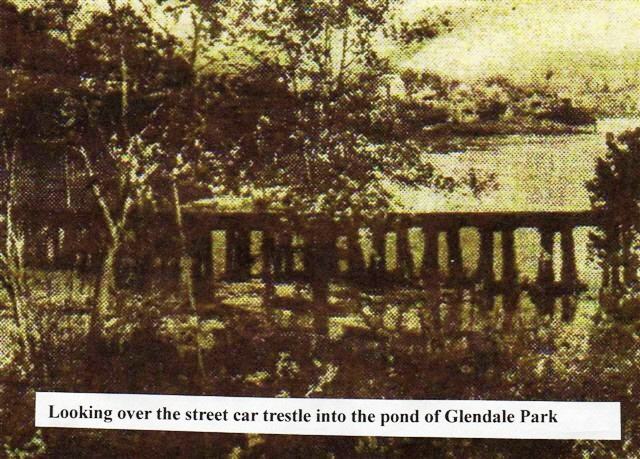 Picture 8
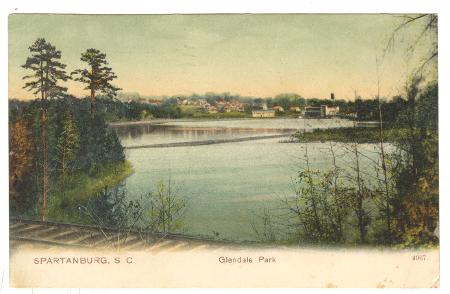 Picture 9
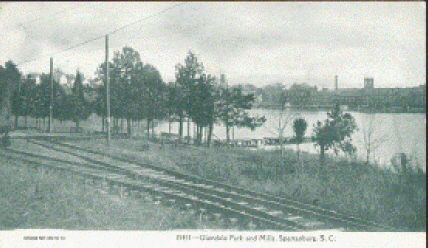 Picture 10
The upper end of the pool was very shallow to allow
children to wade in the waters. A diving board was
mounted on the dam. The sides and dam of the pool were
made of concrete. The bottom was natural gravel and
dirt. Fed by springs in the pasture, the water was
clear as crystal and almost as cold as ice water.
Large bathrooms stood along side the pool in which one
was to bath before entering the pool. Though persons
of both genders were allowed to visit the pool grounds
at any time, separate days were assigned for the
ladies and men to swim. One day when a young teen age
boy was swimming, some bullies caught hold of him
aggravating him by ducking him time and again in the
pool. The more he begged them to stop, the more they
ducked him. coming up, exhausted and mad, he said to
the bullies, “O.K., you drown me and I’ll kill you”.
The life guard broke it up.
The Pentecostal Church in the community used the pool
from time to time to baptize their converts and
members.
While it has been some forty years since I have been
to the pool area, I am told that the bulk of the dam
still stands along with some concrete walls and a few
broken picnic tables, that large trees are growing in
the bed of the pool with a small stream of water
flowing through. See
photographs of what is left of the swimming pool.
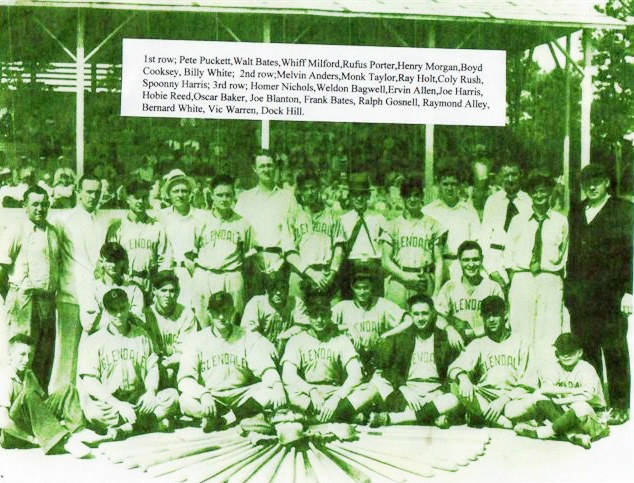
The Company built a ball park and stadium and
sponsored a base ball team which played in the Textile
league. (See pictures 11 & 12.) During WW2,
national league ball players who were in training at
nearby Camp Croft would play with our team. Fact of
the matter, somewhere about 1945, the U.S. Army
Colonel who was at Camp Croft and was over
the ball players, supplying some players and supplies
for Glendale, came into my office along with Tommy
Jett, a former Glendale ball player to get a check
cashed. The check bounced. I turned it over to my
friend who was a F.B.I agent. He had a check ran on
him and found that he had about a half dozen warrants
against him for bad checks. His wife had signed a
warrant against him because he had embezzled some 50
thousand dollars of her money. He was caught and
sentenced to one year and one day by a Spartanburg
Federal Judge. ( See also Baseball
for more on Glendale's baseball story.)
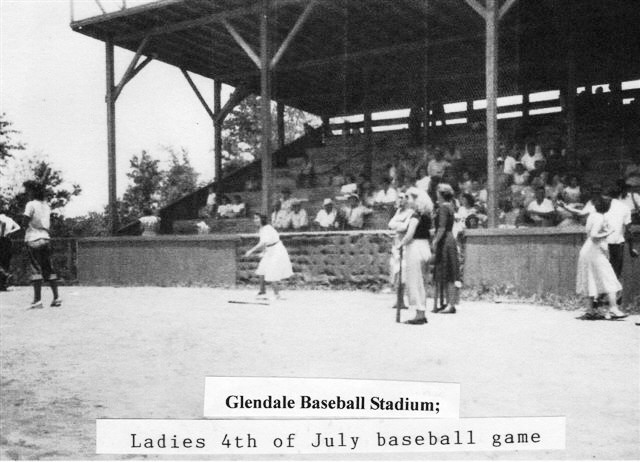 Picture 11
Picture 12
D.E. Converse Co./Glendale Mills, sponsored a Boy
Scout troop for many years with Elmer Willis serving
as Scout Master. I assisted him as assistant Scout
Master in the late forties and early fifties.
Mrs. Ella Bennett and Mrs. J. Hicks Lovelace sponsored
a Girl's club led by Susanne Lovelace, President,
Connie Gail Rhinehart, V.P., Nancy Brown, secretary
and Patsy Rodgers, treasurer were meeting regularly.
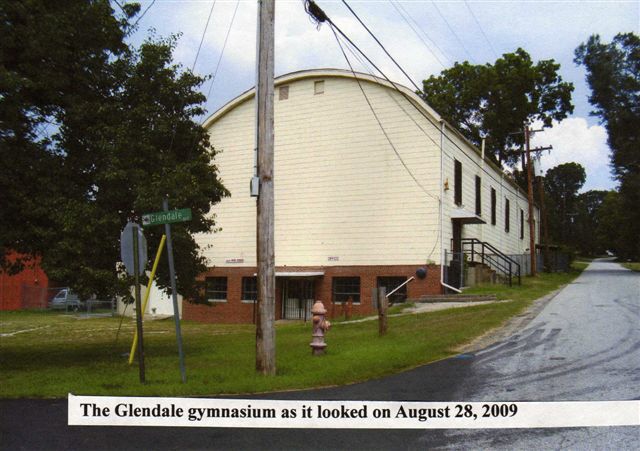
On January 31, 1950, the new Community gymnasium
(picture 13) opened with a double header game before a
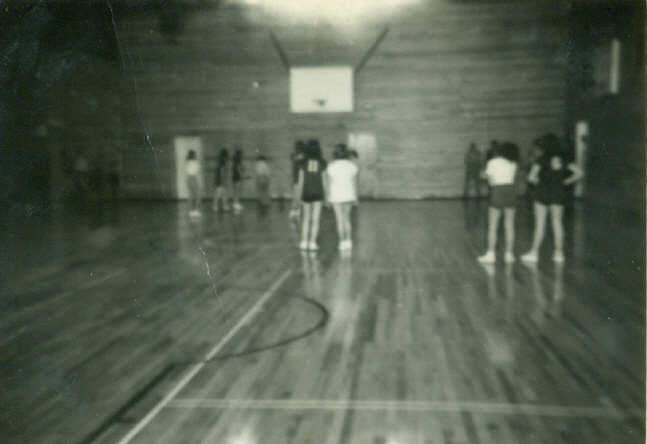
large crowd. The Glendale Girls playing the Pacolet
Girls, (Picture 14, though fuzzy, shows a game in the
gym between Glendale Girls and Pacolet girls but it
might not be the game that opened the gymnasium.) The
Glendale boys played the Navel Reservists.
Unfortunately, I have misplaced my pictures and score
of the games.
 Picture 13
 Picture 14
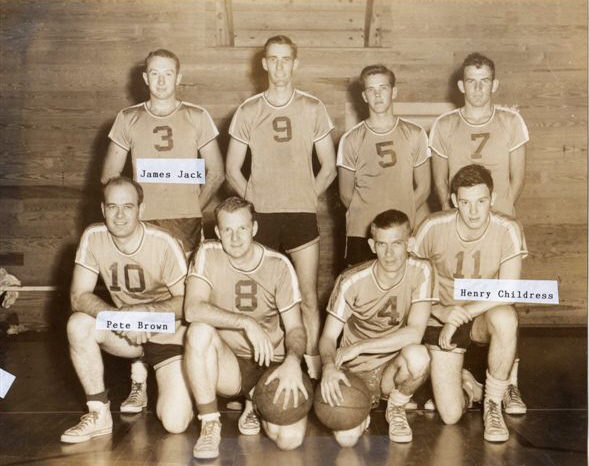
Bobby Cannon had been employed as Basketball coach.
Pete Brown, who became personnel manager, along with
James Jack and Henry Childress, also had
responsibilities in the athletic department.
At the end of the tournament, winning over the
Lyman Pacific's 59/51, the Glendale Browns became the
first team ever to win the YMCA county Basketball
League pennant. They had just eliminated the
Spartan mill team to place them in the final
tournament. Pete Brown racked up 16 points,; James
Jack, 8; Henry Childress 8,; Jimmy Maxwell, 12; Jimmy
Lowell, 13; Others that played on the team were,
Darrell Medlock, Jim Aughtry and Grey Gosnell. Sub
players were, Parris, Lynch and Brookshire. (See
Picture 15)
 Picture 15
Picture 16
Of course, as related in an earlier mill and
village story, the mill sponsored special recreational
and sport events on July 4th and at Christmas time.
In the late 1990s, the Methodist Church sponsored a
Boy Scout club led by Phil Bryant as scout master and
a Cub scout pack led by Robert White as cub master.
Unfortunately, with the Mill and the Methodist Church
closed, there are few sponsors of community sports or
recreation. The Glendale Baptist Church has a
fellowship building in which the youth play basketball
and have other youth programs. A few probably still
fish and hunt but that is about the limit of
recreation and sport activities at Glendale today.
(A new organization has been established in
Glendale to offer more possibilities for recreation
and outdoor activities. It is called the Glendale Outdoor
Leadership School (GOLS) and it is located in the former
Glendale Methodist Church Building. The Leadership School
is a program of the Palmetto Conservation Foundation which
is also has its headquarters in Glendale, The GOLS website
is at:
http://setgols.org/index.php?action=website-view&WebSiteID=530&WebPageID=17036)
This web site has been started as a
public service to share the story of Glendale. See
more information about Mary and her Glendale connection at Mary McKinney Teaster.